
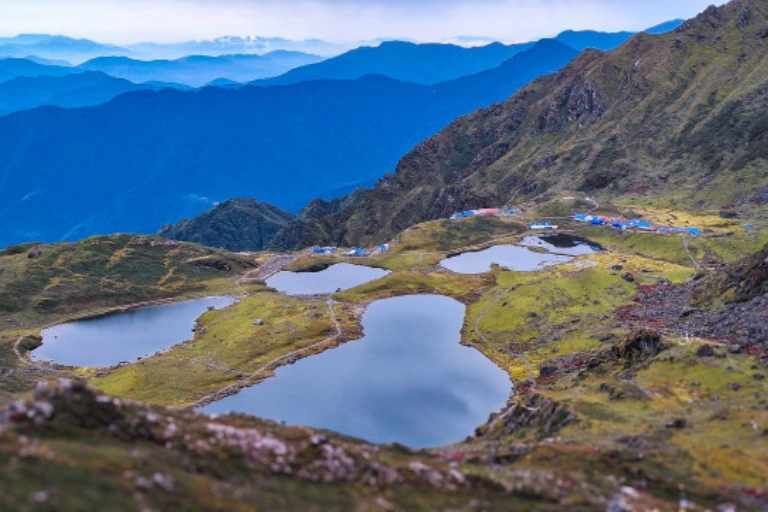
Panch Pokhari, meaning “Five Lakes”, is a tranquil alpine lake complex situated in the Sindhupalchowk District of central Nepal. Resting at an elevation of about 4,100 meters, it is one of Nepal’s notable high-altitude wetlands, revered for its spiritual significance and admired for its unspoiled Himalayan landscape. With its rare blend of natural beauty, cultural depth, and remote wilderness, Panch Pokhari offers one of the most authentic mountain experiences in the country.
Geographical Setting
Panch Pokhari lies northeast of Kathmandu, within the ecological sphere connected to Langtang National Park. The journey toward the lakes leads through dramatic changes in elevation: from subtropical foothills to temperate forests and eventually to the stark, windswept alpine basin where the five lakes sit like quiet blue mirrors cradled among ridges. These lakes form part of the watershed that contributes to the Indrawati River, making them important to the region’s hydrology and local water systems.
A Sacred Pilgrimage Site
For generations, Panch Pokhari has been a revered pilgrimage site for Hindu devotees. The site becomes especially vibrant during the Janai Purnima festival each year, when pilgrims make the demanding ascent to perform ritual bathing and prayers, symbolizing purification and renewal.
The climb reflects a deep spiritual bond between the local people and the mountains. Surrounding villages—primarily inhabited by Tamang communities—carry traditions and cultural practices that enrich the spirit of the pilgrimage, offering a glimpse into the rhythms of Himalayan life.
The Trekking Experience
Panch Pokhari has emerged as a rewarding trekking destination for travelers seeking natural beauty, cultural immersion, and off-the-beaten-path adventure.
Typical Duration: 4–6 days depending on the route
Trail Highlights: Tamang and Sherpa settlements, rhododendron and oak forests, alpine meadows, panoramic Himalayan views
Accommodation: Basic teahouses in lower villages; rustic shelters or camping near the lake area
Best Seasons: Spring (March–May) and Autumn (September–November) for clear skies and stable weather; pilgrims also visit during July–August for Janai Purnima
The trail’s manageable distance, cultural richness, and relative quiet make it an excellent choice for trekkers seeking a less commercial yet deeply rewarding Himalayan route.
Natural Environment
The natural environment of Panch Pokhari is defined by its quiet, high-altitude wetland ecosystem and the gradual shift of vegetation along the ascent. Lower sections of the trail pass through forests of rhododendron, pine, and other temperate species, while the higher elevations open into expansive alpine meadows and rocky terrain.
The region supports a variety of Himalayan plant life, seasonal flowers, and bird species characteristic of these mountain zones. Although large-scale scientific surveys are limited, the area’s ecological value is clear in its clean air, intact landscapes, and the sense of wilderness that remains preserved due to its remoteness and relatively low tourist volume. The lakes themselves, resting within this alpine cradle, contribute to local biodiversity and play a role in sustaining downstream river systems.
Serene, spiritual, and scenically captivating, Panch Pokhari stands as one of Nepal’s most meaningful mountain sanctuaries. Its five sacred lakes offer a rare harmony of natural purity and cultural devotion, while the journey to reach them immerses visitors in both Himalayan landscapes and the living traditions of local communities. For pilgrims seeking spiritual renewal and trekkers longing for an unspoiled path through the mountains, Panch Pokhari remains a timeless and deeply rewarding destination.


