




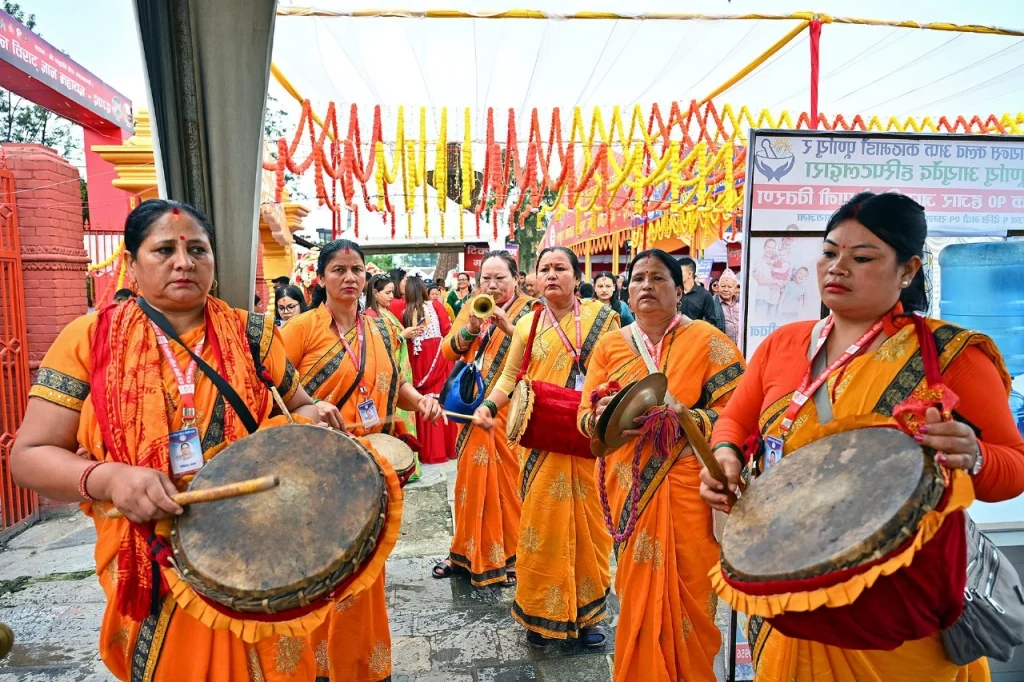
Panche Baja is one of Nepal’s most iconic traditional musical ensembles. Literally meaning “five instruments,” Panche Baja is performed during life-cycle rituals and community celebrations, especially weddings, bratabandha (sacred thread ceremonies), and other auspicious events. Its music marks joy, purity, and celebration, and for many Nepali communities, no major ceremony feels complete without its vibrant sound.
Although the exact combination of instruments can differ by region, Panche Baja has historically been played primarily by members of the Damai (also called Dalit musician) community—Nepal’s traditional hereditary musicians. This group has preserved, transmitted, and refined the art of Panche Baja performance over centuries.
What Instruments Make Up the Panche Baja?
While “Panche” means five, different regions of Nepal use slightly different sets of instruments. However, the most commonly recognized instruments include:
- Damaha: A large kettledrum played with a curved stick, producing deep rhythmic beats that set the pace for processions.
- Sahanai (Sanai / Shehnai): A reed instrument similar to an oboe. It provides the main melody and is often considered the heart of the ensemble.
- Tyamko: A small kettle drum, usually worn with a strap and played with two thin sticks. It creates sharper, higher-pitched rhythms that complement the Damaha.
- Jhyali: A pair of small cymbals made of metal—traditionally a five-metal alloy (pancha dhatu). The Jhyali keeps timing and adds a shimmering, percussive texture.
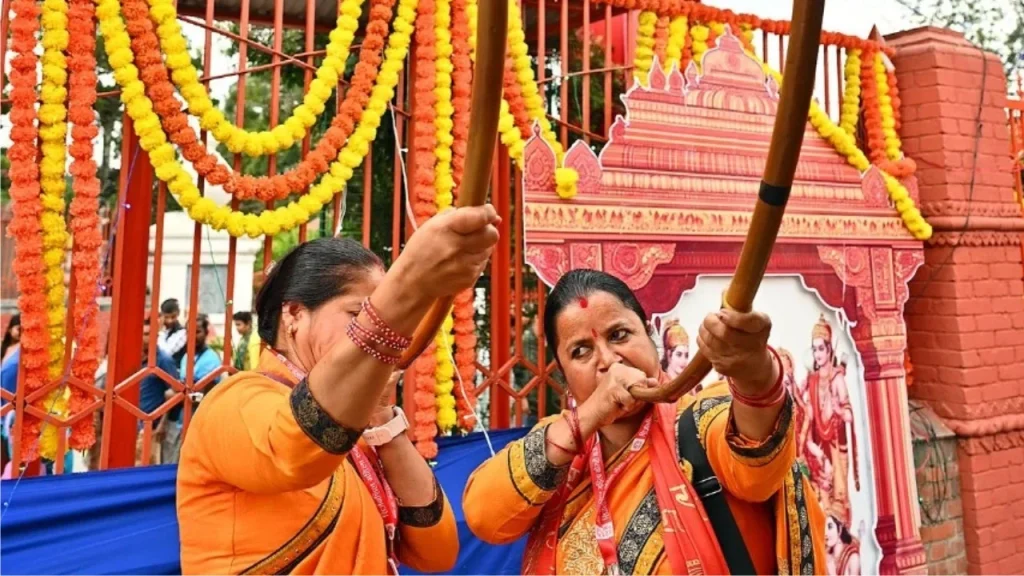
- Narsinga or Karnal Traditionally, one of these long, metal trumpets—
Narsinga: an S-shaped or crescent-shaped horn.
Karnal: a long, straight ceremonial trumpet.
Different regions may use one or the other, and some ensembles include both. This variation is why the “five instruments” can differ depending on local tradition.
In some areas, the Dholaki (a double-headed drum) is also used as part of the Panche Baja ensemble or as a substitute for another drum. Its inclusion varies by locality.
Cultural Significance
Panche Baja holds deep cultural and ritual importance in Nepali society, especially during life-cycle ceremonies and festive gatherings. Its music is considered highly auspicious and is an essential part of weddings, where it accompanies the groom’s procession (janti) and brings energy and joy to the celebration.
During bratabandha, it marks the sacred transition of a boy entering spiritual responsibility, while in festivals such as Dashain or other community events, its vibrant rhythms help unite people and amplify the festive spirit. The sound of Panche Baja is widely believed to bring good fortune, harmony, and positive energy, transforming ordinary moments into culturally significant and memorable occasions.
Preservation in Modern Times
With the rise of modernization and digital music, traditional ensembles like Panche Baja have faced challenges, yet efforts to preserve this cultural heritage are steadily growing. Cultural organizations, schools, and local communities are actively teaching young people how to play these instruments, ensuring that traditional skills are passed on to the next generation.
Increasingly, individuals from diverse castes and backgrounds—including women—are learning and performing Panche Baja, breaking historical boundaries and expanding its reach. Additionally, tourism, cultural festivals, and media exposure have brought renewed interest in showcasing Panche Baja as an authentic symbol of Nepali identity. These combined efforts are helping to keep the tradition alive, allowing the rich sound of Panche Baja to remain an enduring part of Nepal’s cultural landscape.
Panche Baja is more than a set of instruments—it is a living expression of Nepali identity. Its music binds communities, celebrates milestones, and preserves centuries-old craftsmanship and tradition. Through its evolving yet enduring presence, Panche Baja remains a vital part of Nepal’s cultural heartbeat.


