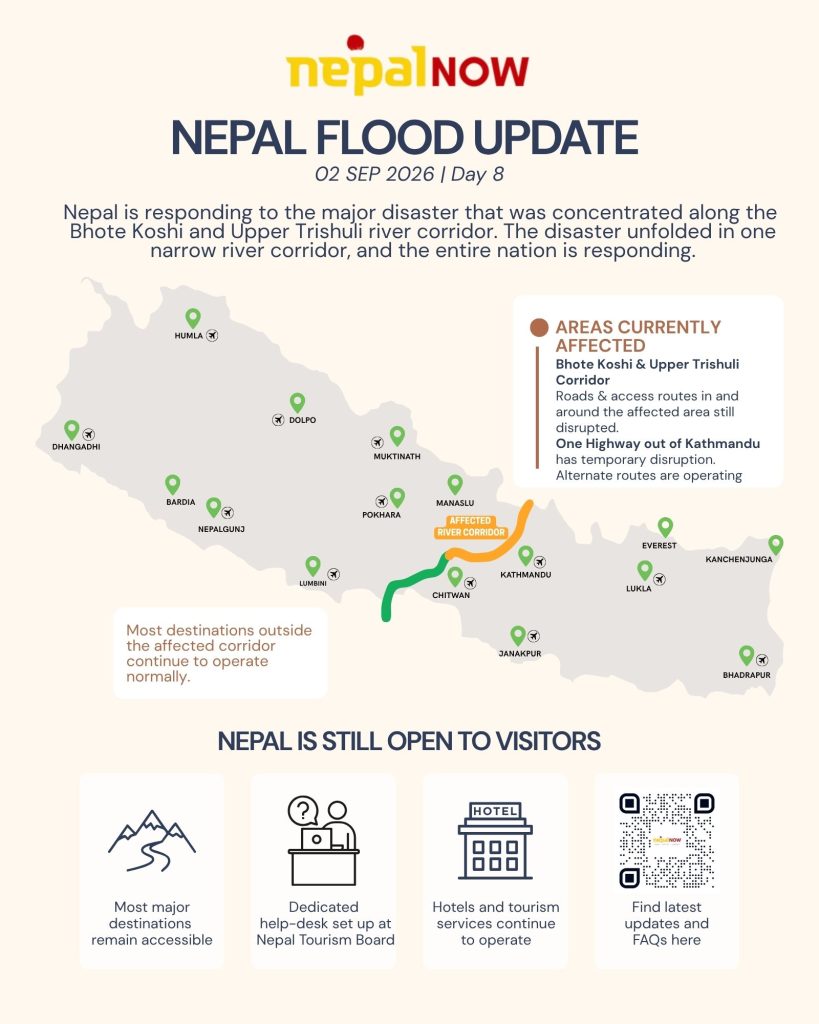

Six days into this disaster, rescue, relief and reaching affected communities remain the priority. The devastation along the Bhote Koshi and Upper Trishuli river corridor is immense. Some communities remain extremely difficult to reach, and the work on the ground continues.
And, as always in Nepal, civil society has stepped up.
We have children in the far west who have donated their lunch money to the Prime Minister’s Disaster Relief Fund. Employees are giving portions of their salaries. Across the country, people are spending countless hours sourcing, funding, collecting and sending essential supplies to communities in need — including to places that are extremely difficult to reach.
Countless volunteers have added their hands and energy to the more than 20,000 security personnel actively involved in the emergency response.
And people are bringing whatever skills they have. Drone experts. Rescue specialists. IT professionals. Data analysts. Medical teams. Businesses. Community networks. Volunteers.
All finding ways to help. Experts from Korea, China and India are also assisting, and there has been an enormous outpouring of help and concern from across our borders and around the world.
There is incredible energy here.
It is the Nepali way. The disaster is concentrated along one river corridor, but the response to it is coming from across Nepal.