




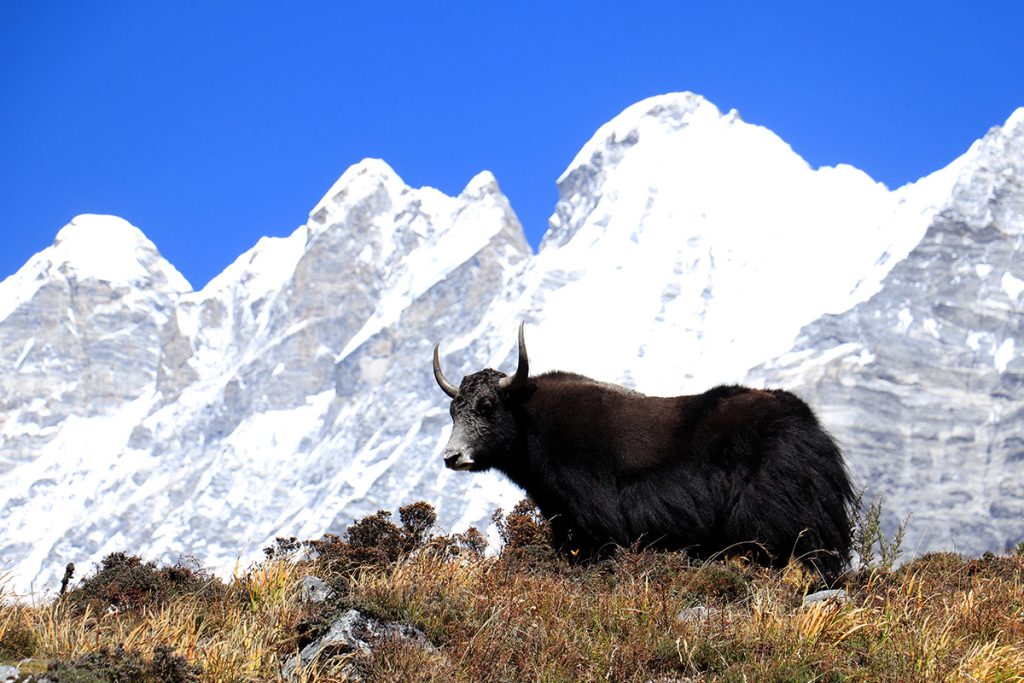
Sagarmatha National Park, located in Nepal’s Solukhumbu District, is a place of superlative natural beauty, deep cultural heritage, and ecological significance. Inscribed as a UNESCO World Heritage Site in 1979, it is one of the world’s most iconic national parks — home to the highest mountain on Earth, dramatic glaciers, and the resilient Sherpa communities who call this rugged region home.
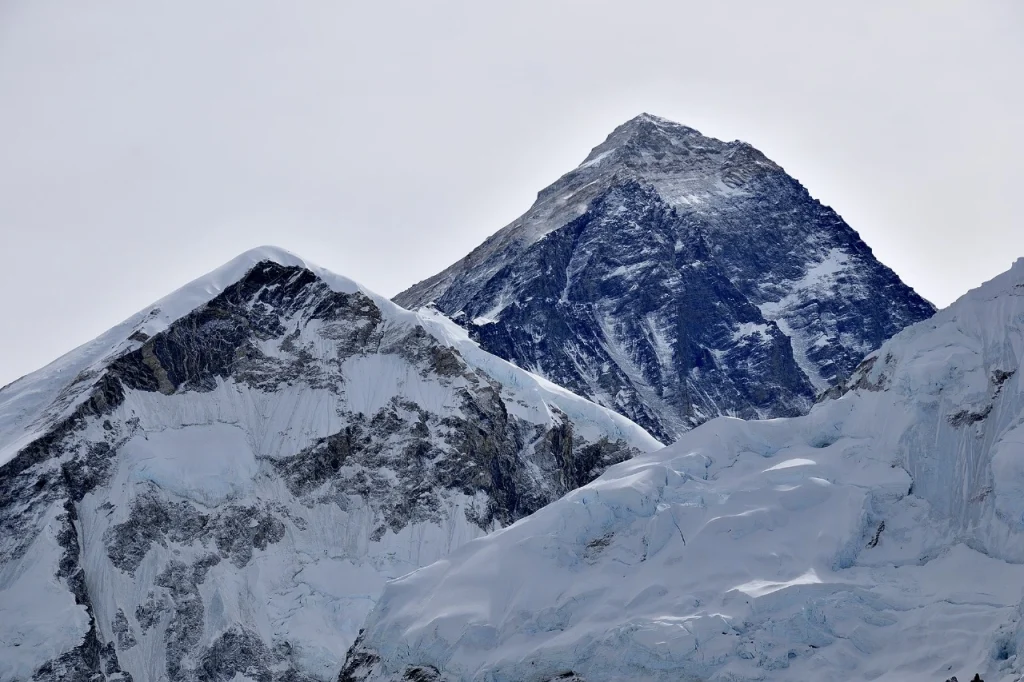
Origins and Significance
- Establishment and Size: The park was officially established on 19 July 1976, following its proclamation in 1973. It covers 1,148 square kilometers, making it a vast protected area spanning from deep Himalayan valleys up to the summit of Mount Everest.A buffer zone of about 275 km² was added in 2002, helping to manage human-wildlife interaction and support local communities.
- World Heritage Inscription: UNESCO inscribed Sagarmatha National Park as a Natural World Heritage Site in 1979, recognizing its outstanding natural phenomena — high peaks, glaciers, and deep valleys — as well as its rare species and cultural values. The park meets UNESCO’s criteria for “superlative natural beauty” and as an example of significant geological processes and ongoing ecological processes.
Landscape and Geology
Sagarmatha National Park spans extremely rugged terrain, with elevation ranging from about 2,845 meters (e.g., Monjo) to 8,848 meters — the summit of Mount Everest.
The park lies in the upper catchments of major Himalayan rivers, including the Dudh Kosi, Bhote Kosi, and Imja Khola.
Several large glaciers — such as the Khumbu, Imja, Ngozumpa, and Nangpa — shape the landscape.
Geologically, the region is “young” in mountain-building terms, formed by the collision of the Indian and Asian tectonic plates.
Flora and Fauna
- Vegetation Zones: Sagarmatha’s vegetation shifts sharply with altitude. Lower areas host forests of pine, fir, birch, juniper, and rhododendron. Higher elevations transition into alpine scrub with hardy shrubs and grasses adapted to cold, thin air. Above about 5,000 meters, vegetation disappears entirely, replaced by rock, ice, and snow. These zones show how plant life adapts to extreme conditions and create a striking ecological gradient across the park.

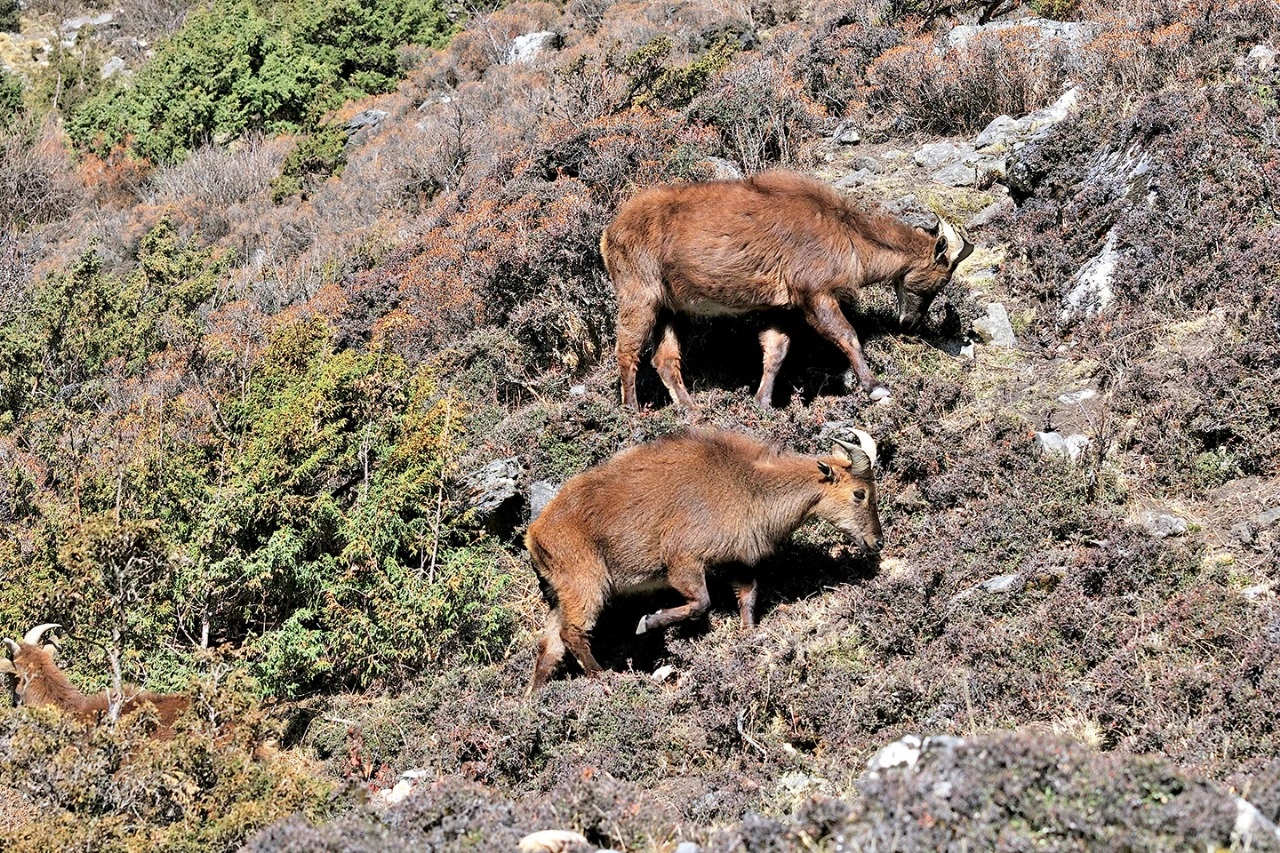
- Wildlife: Despite its harsh terrain, Sagarmatha supports rare and diverse wildlife. The park is home to species such as the snow leopard, Himalayan tahr, musk deer, and the elusive red panda. More than 200 bird species—including the Himalayan monal and high-altitude eagles—inhabit its forests and cliffs. This diversity reflects the park’s importance as a refuge for species adapted to extreme Himalayan environments.
Cultural and Human Dimension
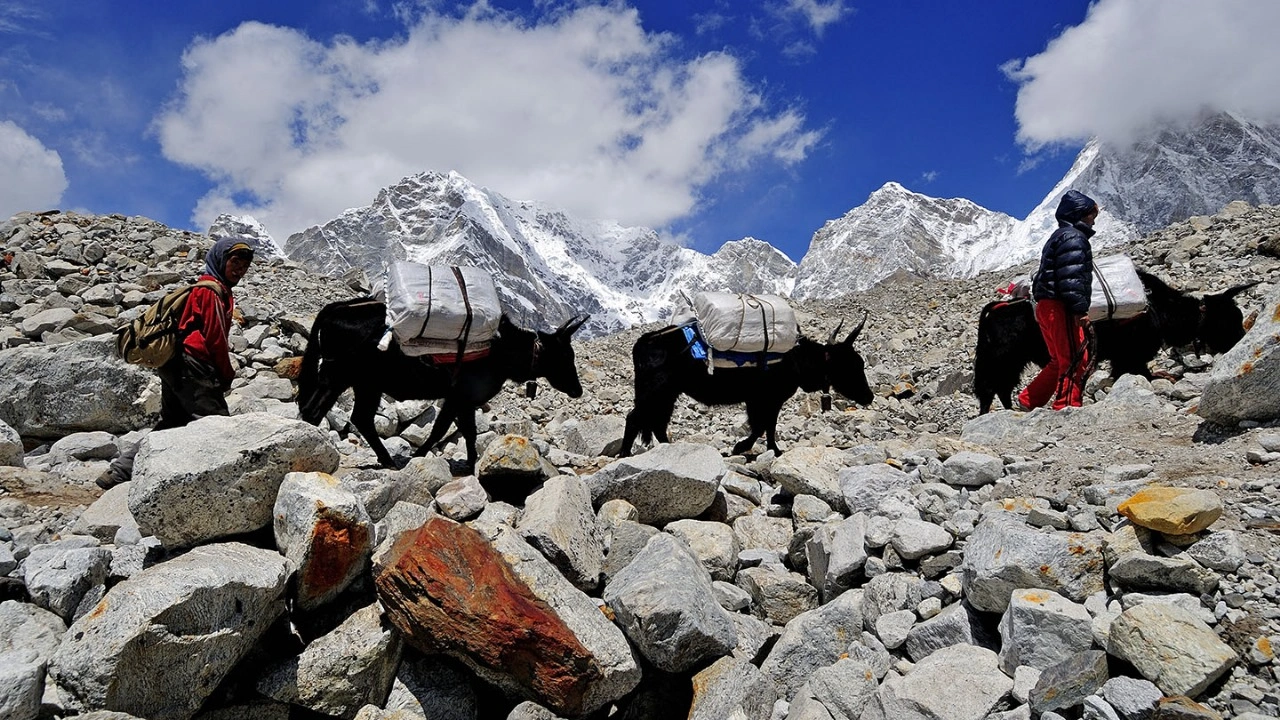
- Sherpa Communities: Several Sherpa villages are located within the park, and their culture is deeply tied to the land. There are more than 20 Sherpa villages, with a population of over 6,000 Sherpas, some of whom have inhabited the region for centuries. Their Buddhist traditions, resource-management practices, and respect for the environment are considered part of the heritage value of the park.

- Monastic Sites: Important monasteries like Tengboche, Thame, Khumjung, and Pangboche are found within or near the park. These spiritual centers are focal points for religious life, festivals, and local practices.

Outstanding Universal Value (UNESCO Criteria)
Sagarmatha is recognized under UNESCO Criteria (vii) and (viii) for its exceptional natural beauty and geological significance. Its towering peaks, glaciers, and deep valleys exemplify superlative Himalayan scenery. Geologically, the park showcases ongoing mountain formation driven by the collision of the Indian and Eurasian plates. These features make Sagarmatha one of the world’s most iconic and scientifically important high-mountain landscapes.
UNESCO World Heritage Centre
Ramsar Designation
In addition to its World Heritage status, several high-altitude lakes within the park, including those around Gokyo, were designated as Wetlands of International Importance (Ramsar sites) in 2007.
Sagarmatha National Park is not just a geographic marvel — it is a living landscape where nature and culture are inseparable. The soaring peaks symbolize human aspiration; the glaciers and rivers sustain life downstream; and the Sherpa communities embody centuries of resilience and spiritual connection to the mountains.
As a UNESCO World Heritage Site, Sagarmatha represents a rare convergence of environmental importance, geological wonder, and cultural integrity. It stands as a testament to Nepal’s role in preserving the high Himalayan ecosystem, and to humanity’s collective responsibility to safeguard this fragile and majestic corner of the Earth.


