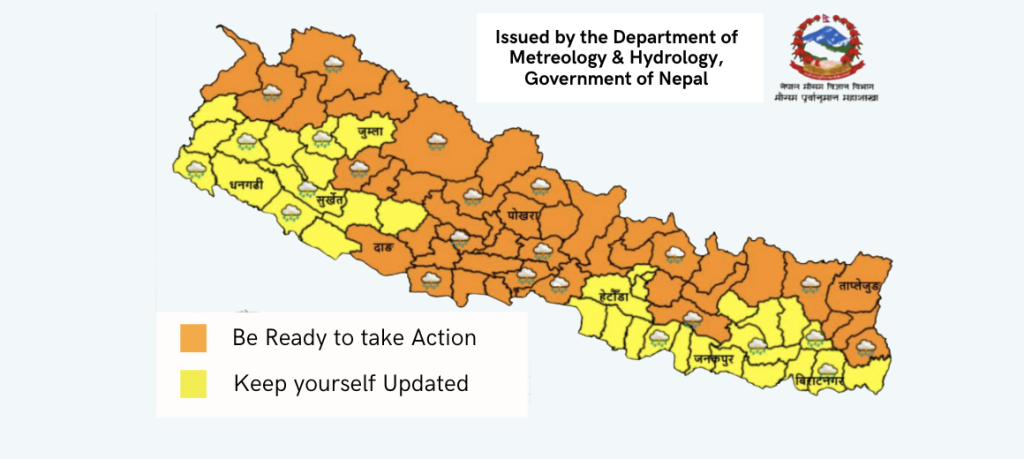
Fresh flooding affects the Manaslu trekking corridor
A flash flood occurred along the upper Budhi Gandaki river corridor in Gorkha early this morning, causing damage to settlements, bridges and trekking infrastructure.
Initial reports indicate significant damage around Salleri and Jagat, with bridges reportedly swept away further downstream around Soti Khola.
Trekking movement along sections of the Manaslu Circuit has been disrupted, with reports of groups returning from Machha Khola.
The full extent of the damage is still being assessed.
What caused the flooding?
The precise cause has not yet been confirmed.
Early reports suggest that a landslide may have temporarily blocked a river upstream, followed by a sudden release of water.
Whether this was a landslide-dam outburst, a glacial lake outburst flood (GLOF), or another mechanism remains to be established.
We will update this information when reliable confirmation becomes available.
What we know so far
The flooding originated in the upper Budhi Gandaki river system, which drains the Tsum Nubri and Manaslu region of northern Gorkha.
Damage has been reported along the river corridor, including around Salleri, Jagat and Soti Khola.
Some bridges and trekking access routes have been damaged or disrupted.
New trekking departures into the Manaslu Circuit are being delayed while conditions are assessed.
Local communities, authorities and tourism operators are gathering information about the situation.
What we do not know yet
Several important questions remain unanswered.
The full extent of damage to villages, houses, bridges and trails has not been established.
We do not yet have verified figures for casualties, displaced residents or the number of trekkers affected.
The condition of all trekking routes and the time required to restore access are also unknown.
Further downstream impacts along the Budhi Gandaki and Trishuli river systems are being monitored.
Manaslu Circuit and Tsum Valley trekking
Travellers planning to start the Manaslu Circuit or Tsum Valley trek should delay departure until updated route information becomes available.
Those already trekking in the region should follow instructions from their guides and local authorities.
Avoid damaged bridges, river crossings and low-lying areas close to the river.
Trekking companies are encouraged to remain in direct contact with their guides and teams on the ground.
Understanding the geographical impact
The Budhi Gandaki flows south through Gorkha before joining the Trishuli River at Benighat.
The wider Chumnubri, Dharche and Aarughat rural municipalities have a combined population of approximately 42,000 people, according to the 2021 census.
However, this is the population of the wider administrative areas, not the number of people directly affected by the flood.
Many settlements are located well above the river corridor.
The actual number of people affected remains unknown.
What about the rest of Nepal?
This is a serious incident affecting a specific river corridor in the Manaslu region.
It does not mean that the whole country has been affected.
Kathmandu, Pokhara, Chitwan, Everest, Annapurna and other tourism destinations are outside the immediate Budhi Gandaki flood corridor.
However, road and trail conditions elsewhere may still be affected by previous rainfall, landslides and snowfall.
Travellers should continue checking conditions for their specific destinations and routes.
NepalNOW continues to monitor developments
Our immediate priority is to share accurate information that helps travellers, guides and tourism businesses make informed decisions.
We are following information from local authorities, government agencies and tourism operators working in the affected region.
As more details become available, we will update the situation report and interactive map.
Our approach remains the same: understand what happened, establish where it happened, explain what it means for travellers, and provide context for the rest of Nepal.
This is a developing situation. Information reflects reports available on 11 October 2026 and may change as assessments continue.