Autumn is underway, routes are reopening, and Nepal keeps moving
A deep depression over the Bay of Bengal brought three days of heavy rain and snow from 25–27 September, causing localised landslides, flooding, heavy snow at altitude and temporary disruptions in several parts of Nepal.
A week later, we have a much clearer picture.
The rains have stopped, the ground has been drying, repair work is moving faster, and trekkers, guides and local communities have been passing through many of the affected routes.
Most major trekking areas are operating again, although some sections require caution, local knowledge, alternative routes and a little flexibility.
That distinction is important. There are specific disruptions and workarounds, rather than entire regions being closed.
A big first: international flights to Pokhara
There is also some very positive news for Nepal tourism.
flydubai has started scheduled flights between Dubai and Pokhara, making Pokhara a second international gateway into Nepal alongside Kathmandu.
This is a significant development. International travellers now have a scheduled option to enter Nepal directly through Pokhara, the gateway to the Annapurna region and much of western Nepal, rather than having to arrive through Kathmandu first.
It is another important step in making travel around Nepal easier and spreading tourism beyond a single international gateway.
Rasuwa & Langtang: access steadily improving
In Rasuwa, work continues to reopen roads along the river corridor badly affected by the August disaster.
With the rains over and the ground drying, crews have been able to work faster. Road access is progressively being restored, importantly making it easier for local communities to receive essential supplies.
There is encouraging news from Langtang too: trekkers have now reached Langtang.
Reports from people actually walking the trail mention a few landslide sections that still need care and a stream crossing where shoes are coming off and feet are getting wet. But the overall feedback is that the route is passable.
These are not completely normal trail conditions yet, so good local information and experienced guides remain important.
Annapurna: workarounds rather than closures
Conditions around the Annapurna region continue to improve.
The disruption around Tatopani has now been cleared — albeit in rather familiar Nepali fashion, with some of the work still a little makeshift. But traffic is moving.
At Pokharebagar, the damaged bridge remains a disruption and permanent repairs could take a few weeks.
For now, there is a small detour, with vehicles operating on either side and travellers transferring between them. Anyone who has travelled extensively in Nepal will recognise this system — when a road or bridge is interrupted, a workaround quickly develops while the permanent repair catches up.
On the eastern side towards Manang, Dharapani can be reached, after which trekking continues. Some sections are using alternative routes while repairs continue, but movement through the area is possible.
Larkya La & Thorong La: people are crossing
There is also good progress on the high passes.
On the Manaslu Circuit, Larkya La has now been crossed by groups for several days, progressively establishing and clearing the trail following the significant snowfall in late September.
On the Annapurna Circuit, Thorong La has also been crossed by small batches of trekkers, while locals from Manang are checking the route and conditions.
This is encouraging, but high mountains are high mountains. Conditions can change quickly, particularly after snowfall. A successful crossing yesterday does not automatically guarantee identical conditions tomorrow.
Current information from guides, local communities and operators remains important.
Rafting: Trishuli checked for the season
Nepal’s rivers are being checked too.
The Nepal Association of Rafting Agencies (NARA) has conducted a reconnaissance of the Trishuli River following the monsoon and recent heavy rainfall.
Most guides involved are comfortable with the river conditions for rafting this season.
Some of Nepal’s other rafting rivers still need to be checked as operators prepare for the season, so conditions should continue to be confirmed river by river.
A little more weather ahead
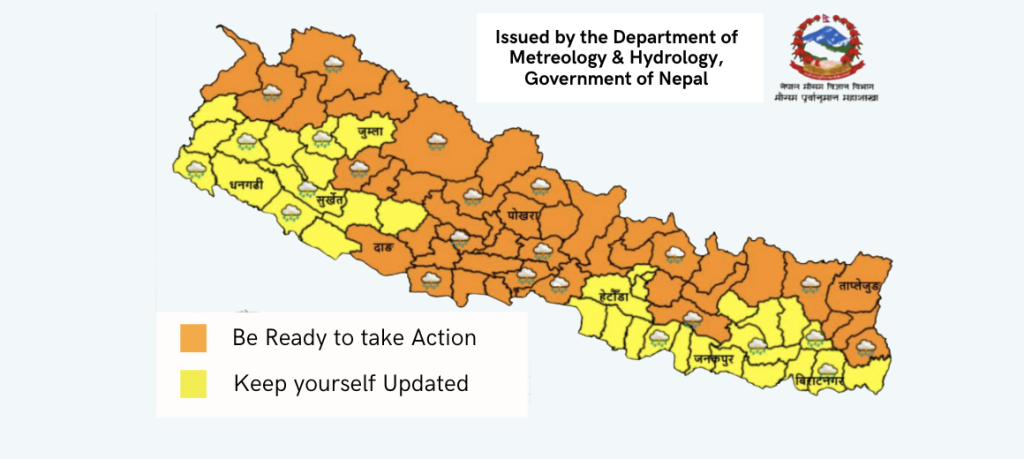
Meteorologists are predicting some light rainfall across Nepal over the next few days, through around Sunday, 11 October.
At higher elevations, rain lower down can mean light snowfall in the mountains, so trail and high-pass conditions may change again.
If you are travelling in the mountains, keep yourself updated on the latest weather conditions, stay in touch with your guide or local operator, and be prepared to adjust plans if necessary.
Sometimes waiting a few hours — or changing a day’s plan — is simply part of travelling well in the Himalaya.
Travelling Nepal right now? Keep a little space in your plans.
Nepal is moving again, but this is still the Himalaya.
Our advice is simple: keep some padding days in your itinerary.
Don’t make every connection too tight. Carry a good book. Sometimes a road delay really is just a road delay.
And accept that small changes are part of travelling through terrain like ours.
A damaged bridge might mean walking for a few minutes and changing vehicles. A landslide might mean taking an alternative trail. Snow might mean waiting while locals and guides establish a route.
One of the things we keep learning is just how quickly adventure rebounds in Nepal.
People live along these roads and trails. They need them too. Local communities, road crews, guides and tourism teams start finding solutions remarkably quickly.
That does not mean ignoring conditions or taking unnecessary risks.
It means checking, adapting and travelling accordingly.
NepalNOW continues to monitor conditions
At NepalNOW, we continue to monitor what is happening around the country and keep our interactive “What is happening where?” map alive and updated.
The idea is simple: help travellers and the tourism industry understand where there are disruptions, where conditions are improving, and where a little more caution, patience or flexibility is needed.
And we are seeing something else that makes us smile.
More travellers who are already here are sharing:
I AM IN NEPALNOW
And travellers preparing for their journeys are posting:
I AM GOING TO NEPALNOW
That is perhaps the best picture of Nepal right now.
We have been through a difficult period. Some communities are still recovering. Some roads and trails still need work. And some journeys will require adjustments.
But Nepal is not standing still.
Trails are reopening. Roads are being repaired. High passes are being crossed. Rivers are being checked. The autumn season is underway.
Come with some flexibility, good local information, a little patience and an appetite for adventure.
Nepal is moving forward.